|
Folk Dance Federation of California, South, Inc.
|

|
CLICK AN IMAGE TO ENLARGE
Recorded history of Japanese folk music and instruments goes back some fifteen centuries to the mid-400s CE when for an emperor's coronation, a Korean musical ensemble with an orchestra of perhaps 80 musicians, crossed the straits to perform for the occasion. At the time, the cultures of the mainland, including the numerous Chinese states, Manchuria and especially Korea, were quite advanced, and the courts of the Japanese states welcomed the infusion of their music and arts. This also led to a considerable amount of visiting and studying abroad in Eastern (and to a degree, Southeastern) Asia by Japanese scholars of music, dance, and the arts. It flourished and the exchange continued, but somewhere along the line, faded and very little of early Japanese folk music has been retained, with the possible exception of the "gagaku" and "noh" music (the latter is rather more of a combination of dance/music/drama/mime). The music that was cultivated by the Samurai, Nogaku, beginning about 1350, became the "property" of the ruling classes, and developed into a classical art form rather than purer folk, and with it went the instruments.
The Japanese music system is based on the pentatonic scale, inherited from China, and the musical instruments reflect this in their development, style and construction. There had been quite a range of instruments in use for nearly two centuries (800 to 1000 CE), and one large orchestra in Kyoto, which was then the capital of the country (called Heian), is reported to have utilized seven varieties of wind instruments, seven percussion, and three of string and bowed. By the beginning of the present millenium, however, because of changes in the Japanese tonal system, some instruments were discarded and the rest retained – some with modifications. Others were subsequently added.
The aerophones include several flute-type instruments called fue, such as the hichiriki, ryuteki, shahuhachi, shinobue, and shō.
Satsuma biwa, a lute-type instrument dating back to the 9th century, is a 4-stringed instrument played with a plectrum, used as an accentuating accompaniment rather than for leading melody. There are others in the biwa family, of varying sizes, and the bugaku biwa is so large and weighty, it must be played with its base resting on the ground, between the knees like a cello.
Another stringed instrument, that is probably the most familiar to Occidental audience, is the shamisen, which originated in China in the 1500s and seems to have spread extensively over the East Asian area. It is a 3-stringed instrument with a square body that is covered with skin and has a very long neck.
The small bowed 5-string kokyū, that reminds one of a lijerica (a pear-shaped, three-stringed instrument which is played with a bow), is often used to complete a stringed folk (or other) instrumental trio.
The koto (also known as sou), which has been relegated to the peasant after originally being retained for the court, resembles the Chinese zither – 7-stringed and fairly large.
Drums are used to accentuate the music, and of these there is the large taiko (also known as wadaiko). Even larger is the mokogyu, a cradled instrument. Two sizes of hourglass-shaped double drums are the ōtsuzmi and the kotsuzumi. Other Japanese instruments include the >mokkin (a tupe of xylophone), the shōko (gong), tamburines, various clappers, ratchets, and rattles.
Following the opening up of Japan after Commodore Perry's visit in the middle of the last century, the Imperial Court of Japan, in an effort to modernize the arts of the country, shifted emphasis towards the Europeanization of Japan's music, and the study of, and under, Western musicians and composers was ordained, and because of this influence, Japanese folk music no longer represented the national art that it had for centuries.
Today, the music of Japan is heavily influenced by the West, and likewise, the musical instruments of Europe and America are used extensively, including the electronic amplification. Still, however, in the villages, where Japanese ancestral pride retains a strong hold, the loyalty to traditional music and instruments may also be found equally strong.
SOME JAPANESE FOLK INSTRUMENTS
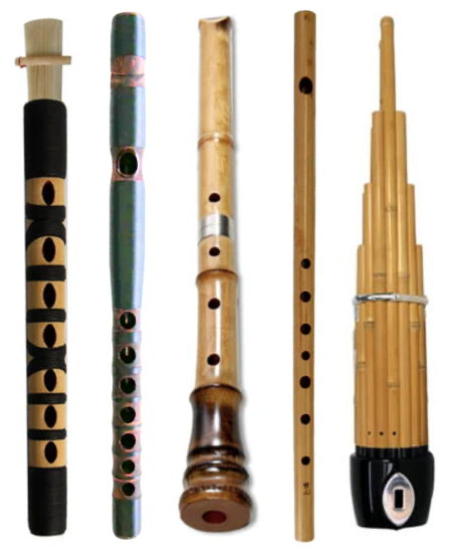
FUE (not to scale) |
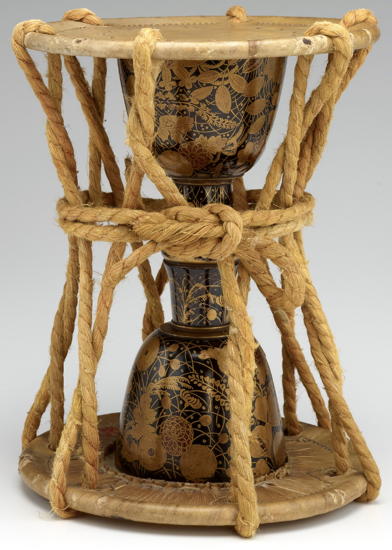
ŌTSUZUMI |
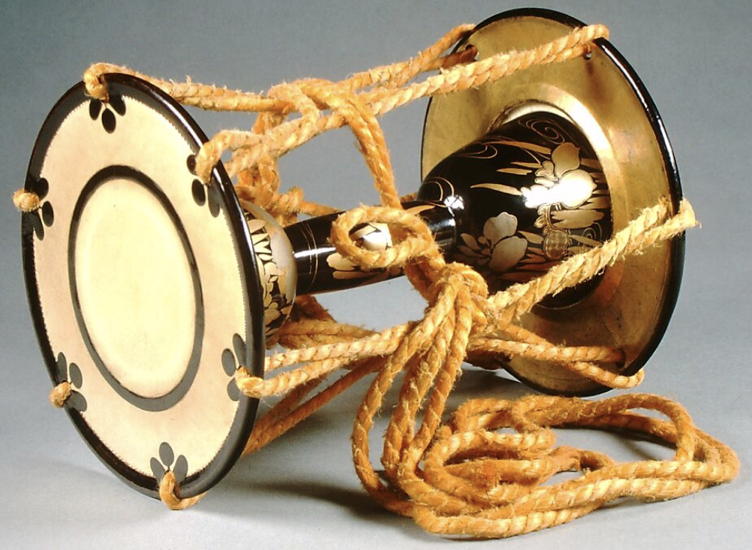
KOTSUZUMI |
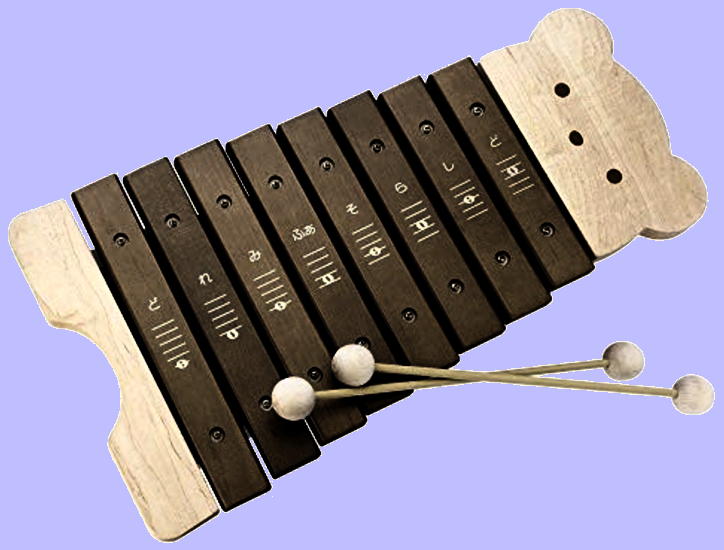
MOKKIN |
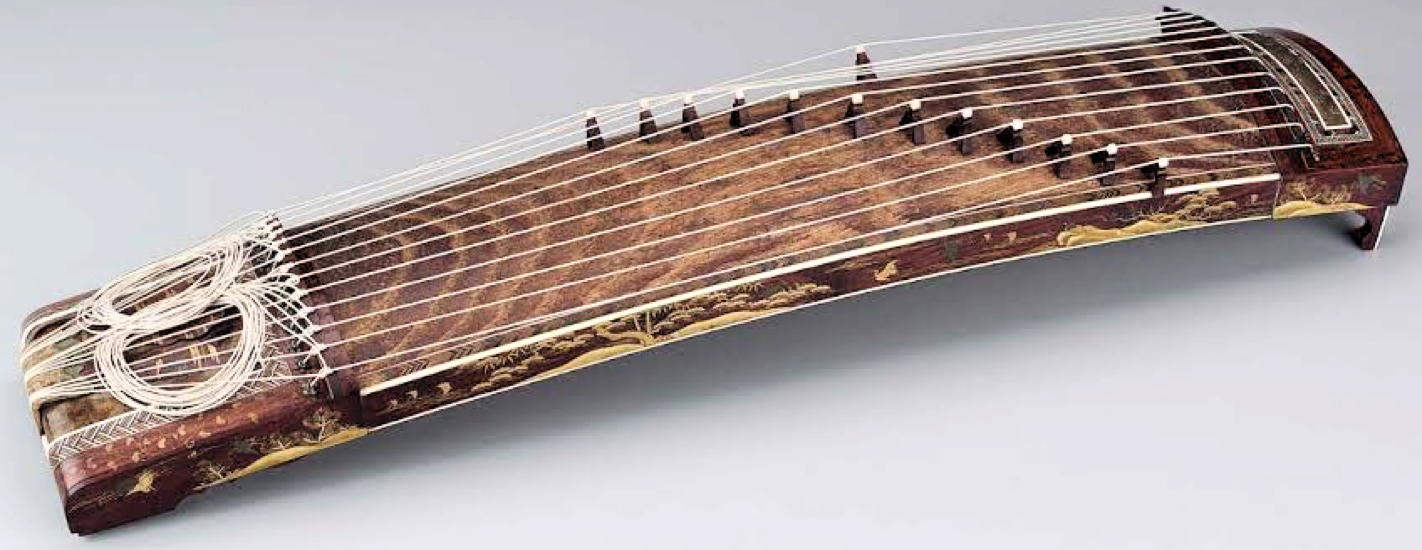
KOTO |
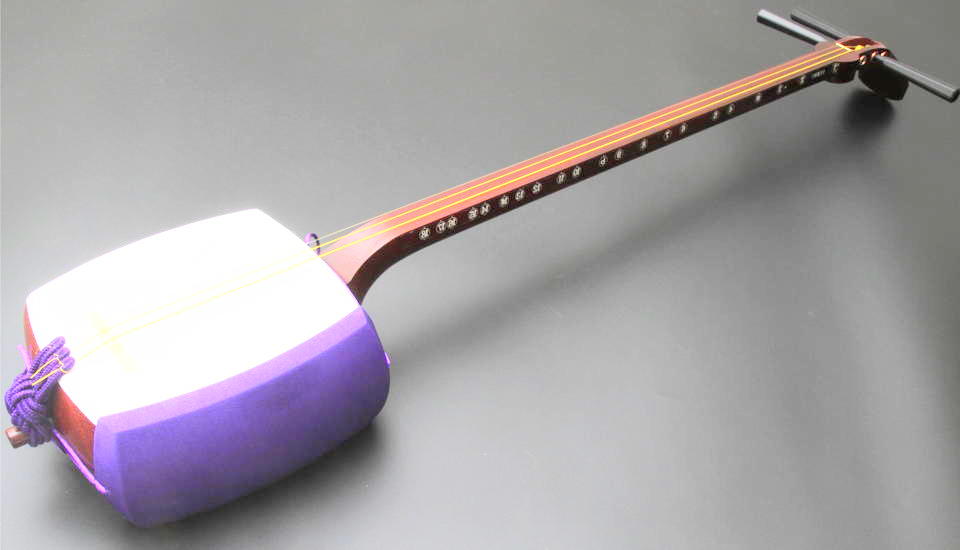
SHAMISEN |
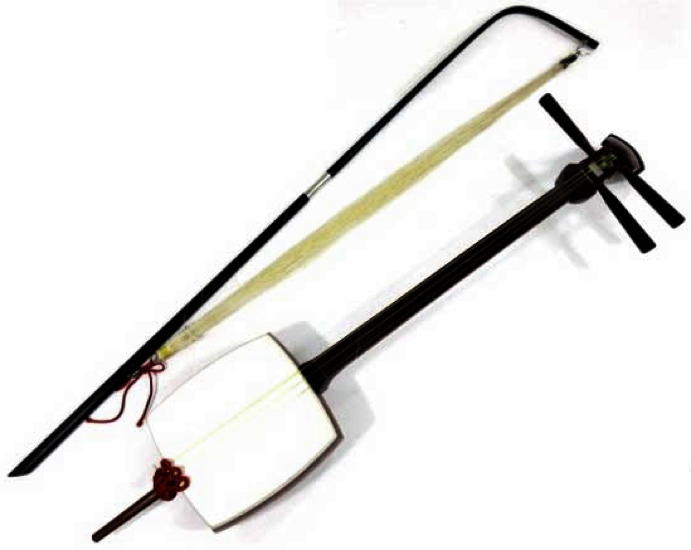
KOKYŪ |
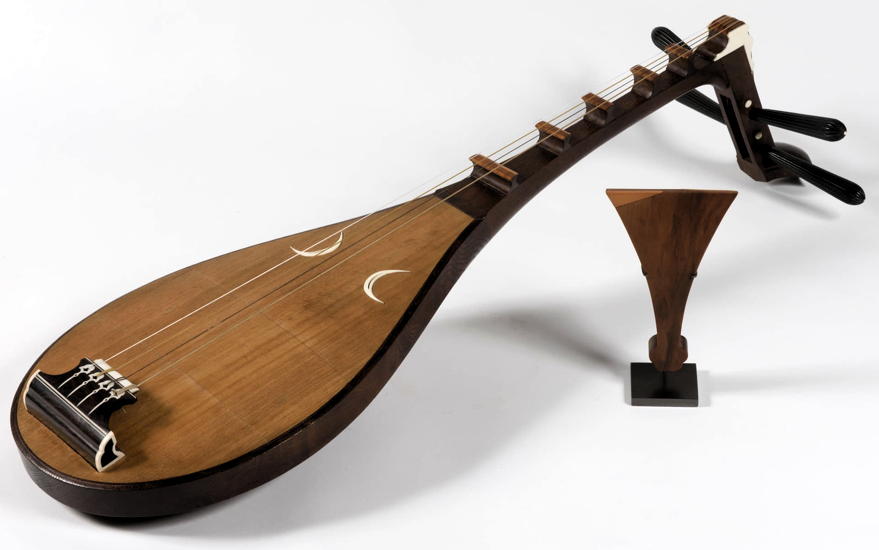
SATSUMA BIWA |
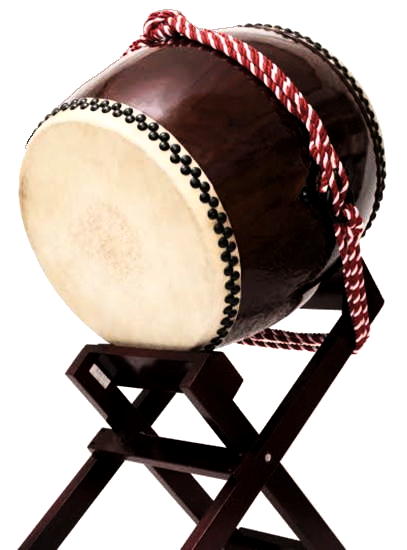
TAIKO |
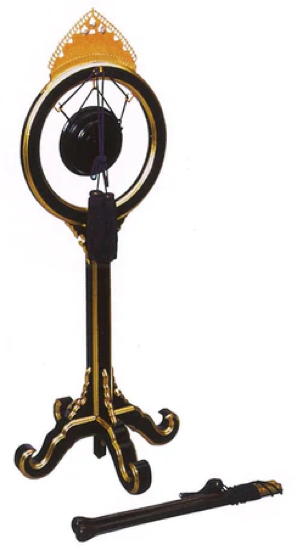
SHŌKO |
Printed in Folk Dance Scene, January 1978