|
Folk Dance Federation of California, South, Inc.
|

|
CLICK AN IMAGE TO ENLARGE
In the late 1800s, there was a group of people called the Molokan sect. They were found in the Transcaucasus region, in the district of Kars and in the provinces of Erivan and Elisavetpole. As a peaceful sect, they objected strongly to being involved in the Czar's militia. Fleeing both religious and social persecution, they first fled to the more uninhabited regions in southern Russia.
Then, in 1899, three of the leaders of the group, W.G. Smarin, F.S. Ruchnov, and Phillip M. Schubin, went to St. Petersburg to petition the Czar for exemption for the Molokans from military service and/or for permission to leave Russia. Neither were granted, and as a result, these men were imprisoned for a period of several months.
In 1903, realizing the futility of trying to deal with the Czar, the Molokans decided to flee Russia. Many immigrated to the United States, particularly to California. Some settled in East Los Angeles, and some others moved on to San Francisco. Now there are over 150,000 Molokans in California.
As with any refugee group, they ran into difficulties, with new language and new customs. A major problem proved to be trying to integrate into American society while retaining those unique qualities that made them Molokans. In striving to maintain customs, the peasant clothing of old Russia was worn (and is still the normal street attire for Molokans today). The outfits include a fluffy shirt with a high collar and buttons on the side and a waistband tassel. They also continued to use the Russian language at home and in the church, and to cook Russian-style food.
Singing plays a large part of the Molokan life style. Musical instruments are not allowed in the home or the church, so the human voice carries all the melodies. Tunes are unrecorded and handed down from one generation to the next. Songs are taught in the Russian language in home groups called Spevka. Many of the tunes are derived from Cossack singing, while others are said to be spiritually inspired. The lyrics can be changed, but are always sung to the ancient melodies brought over from Russia.


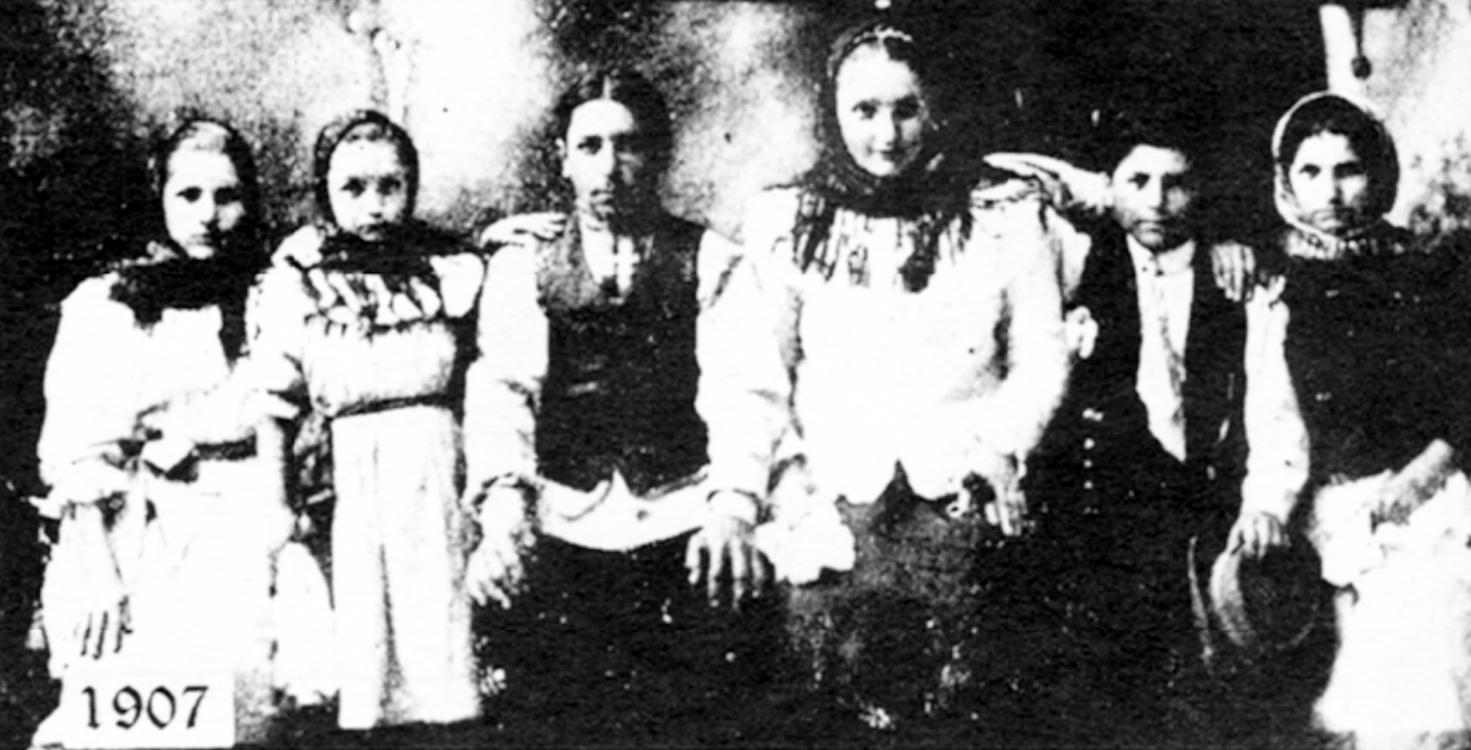
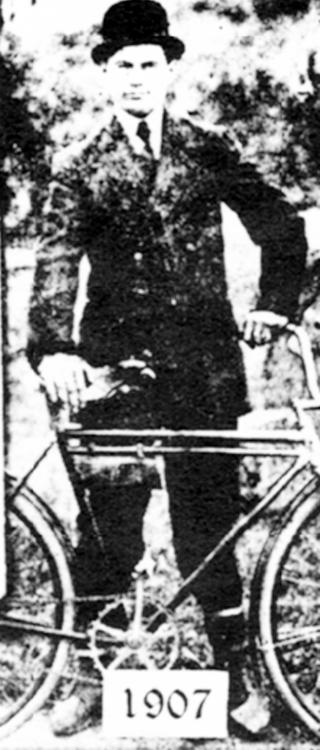


Photos courtesy of Mr. Dave Urainer, Mrs. A.J. Mechikof, Mrs. M.N. Slevin, and Mrs. W.J. Smarin
Printed in Folk Dance Scene, titled "Molokan Russians," October 1985