|
Folk Dance Federation of California, South, Inc.
|
|
CLICK AN IMAGE TO ENLARGE
Folk dance is the heart and soul of a culture. It pulsates with life, deriving its energy from the land in which it originates. Its language is the vernacular and through movement it expresses its mood. Its message is direct and simple. The festive and joyous mood of a folk dance draws from the audience an immediate response. This mood is so infectious that the audience becomes part of the total process by clapping their hands, stamping their feet, and even singing the song to which the dance is performed.
Romance id a recurring theme of Nepali folk dance. Woven in the threads of love, it deals with falling in love and getting married, that all-too-familiar, mundane theme with which humans are so preoccupied. Neither abstract nor philosophical, Nepali folk dance is a mirror of reality, striking at the heart of human experience. Love is something every human being is capable of experiencing, and it is this experience that remains the underlying theme of most Nepali folk dances.
Because folk dance involves both performers and spectators, it is participatory – communal in nature. Performed by the members of a given tribe in a social setting, such dances are for all seasons. They can be performed By any time. Nepali folk dance does not need a special occasion.
In villages of Nepal, folk dance is a part of the people's life. There are dances that are seasonal; others are simply based on various occasions. The seasonal dances are done during the monsoon, autumn, winter, and spring seasons, during and after work. Of all the dances, those performed during the harvest season are the best known, for they are festive in mood. A successful harvest ensures ample food for the rest of the year. With grain in storage, people are to free to indulge in activities that bring joy to their otherwise hard life. Folk dance is, therefore, a means of recreation a means to express joy, and a means to share that joy with willing participants. Nepali folk dance tells about the happiness, love, and hope of the Nepali people who believe in harmony and peace.
Like folk dances of other cultures, folk dance in Nepal is presented in many forms. There is not a region in Nepal that does not nave its own folk dance. From the mountains in the north to the plains in the south, each region has its own folk dance form. Although each dance is characteristic of the place from which it originated, each shares the same repertoire of body and movement and hand gesture with the other regions.
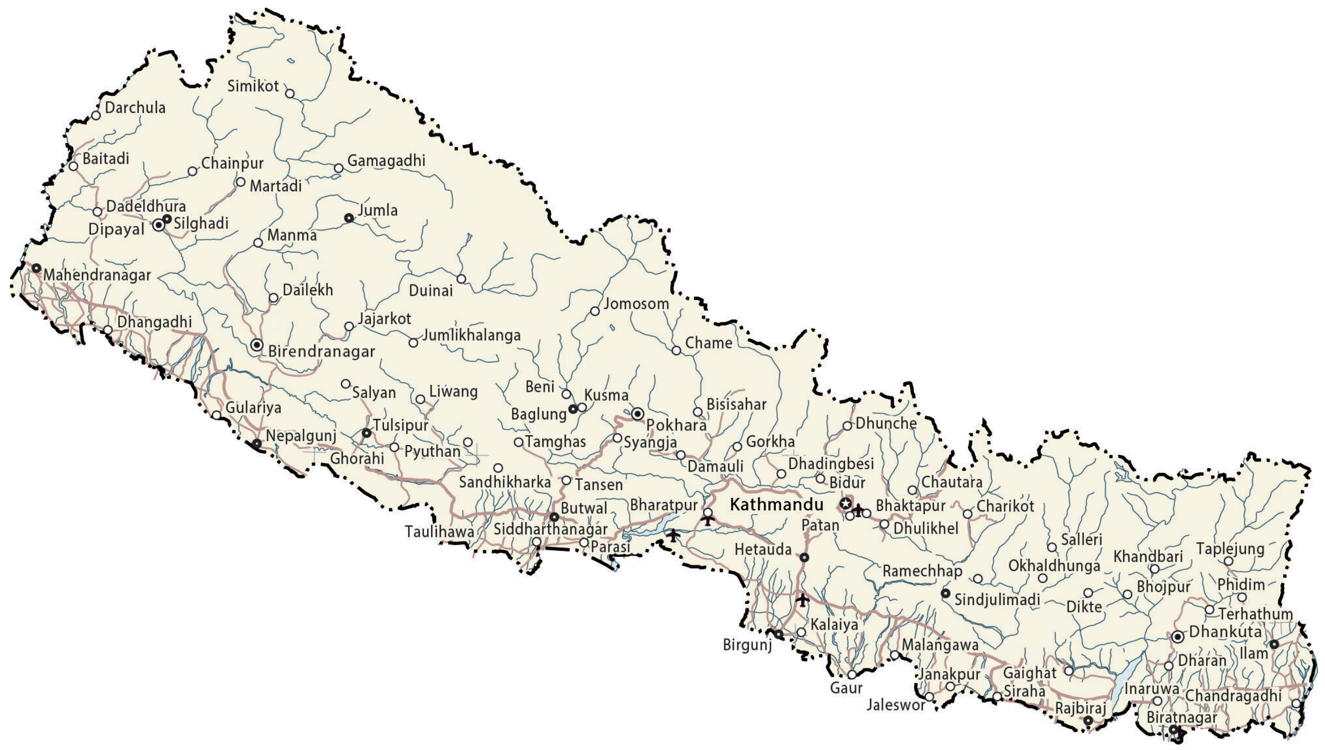
Nepali folk dance can be divided into three categories, coinciding approximately with the three geographical regions of the country: north, south, and the area in between. These regions are populated by races of varied ethnic background and are rich in folk dance traditions. The northern region, for example, is predominantly inhabited by the Sherpa and Bhote tribes and the dances there are representative of those who live there. Similarly, dances associated with the Libus, Tamangs, Magars, Gurungs, Bauns, Chetrirs, and Newars are found in the mid-region of Nepal. Characteristic of the plains are the Tharu and related tribes.
Lying in close proximity to Tibet in the north, Nepali folk dances of the northern region show relationship with those of Tibet, while those found in the southern region show likeness to those of India. But those from the middle region, the heartland of Nepal, are purer in form, and it's with these forins that this article is concerned.
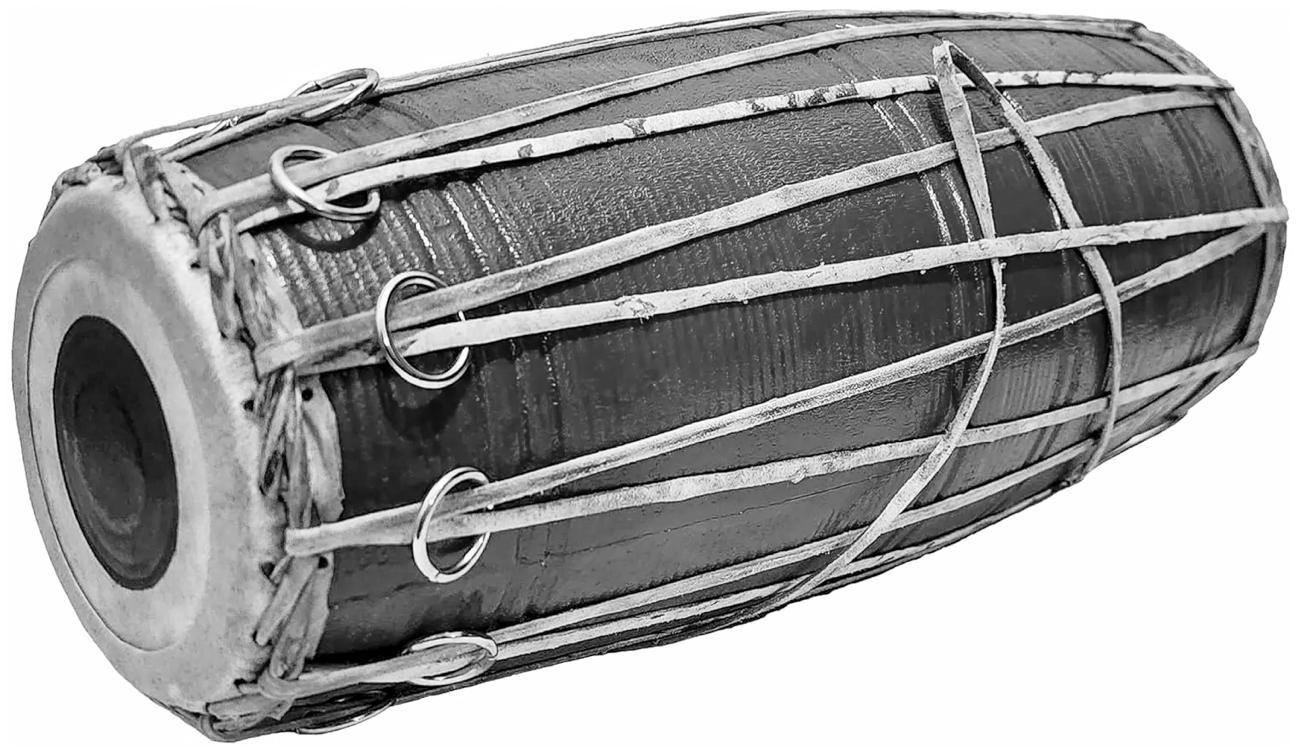 All Nepali folk dances are accompanied by songs and music, consisting of simple words and a few basic musical instruments The madal (drum), is, however, the main instrument that gives life to a dance. Sometimes a sarangi (fiddle-like instrument) is played to accompany the drum for songs that originated in the hills. But a drum is all that is needed to inspire participants to move in harmony and rhythm. A drum is, therefore, the heartbeat of all Nepali folk dances. Without it, the dance loses its vitality.
In a solo dance from the Kathmandu Valley, a girl becomes nostalgic about her highland childhood. She pines for the fresh air, cool spring water, and green forest she left behind. Gesturing to the mountain in distance, the girl dances and sings these words:
I shun the water from your well;
From tasting it I shrink.
But water from the waterfall
Is what I crave to drink.
I wait for you to take me there,
Where such clean draught is drawn;
But here I bide in loneliness
Awaiting you since dawn.
Yon towering mountain I would climb
Without the slightest fear,
Were you to come and lead the way,
And I could have you near.
Lead me to yonder waterfall
That thunders from on high,
And there I'll pour its cold delight
Through lips all parched and dry.
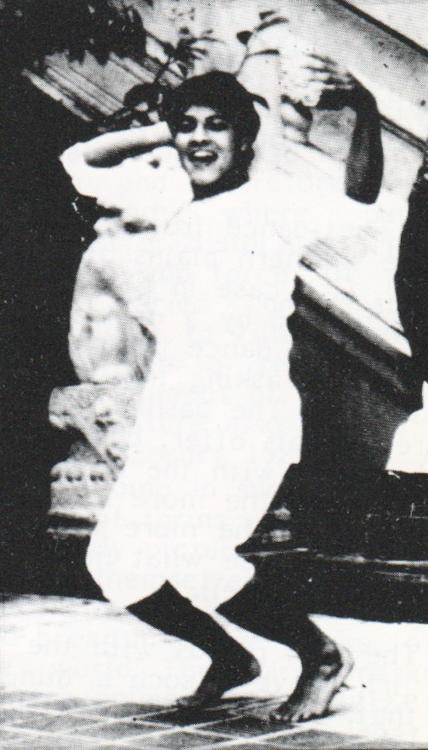 The dancer uses her hands and body to complement the spoken words. For instance, she gestures catching the water from a waterfall in her cupped hands and drinking it. With her hands she points to the mountain where she believes there is a waterfall. Gracefully she dances to the rhythm of the drum, turning clockwise and counter-clockwise.
A duet, performed by a man and a woman, usually carries romantic overtones. Performed by lovers or by strangers, such dances often culminate in actual marriages in real life. In a dance from western Nepal, the wonth teases her partner, "With two wives, sons, and two daughters, you are but an old man. But you still act young when you see a young girl." The man replies, "It hurts me when you say such nasty things about me. I am not even married, and you say that I have five sons and two daughters. How can that be?"
The girl, however, continues to tease the man with many such accusations. So he gives the girl an ultimatum, "Please don't say such things any more or I will claim you as my wife this very moment."
To this the girl replies, "How can you afford me as your wife? I come from a wealthy family, where there are servants to serve me. and I eat my food out of a plate made of gold. Besides, you look like an old buffalo that eats all day and hardly gives any milk."
The man finally puts an end to this teasing by saying that it is only naturai for an unmarried girl to fall in love and get married. With a word of advice, the man says to the girl, "Don't take any pride in your beauty and youth. They will not last long. What will happen when you grow old? No one will come to ask for the hand of an old hag. You wili have to live as a spinster in your parents' home for the rest of your life." With these gibs the man instills insecurities in the girl's mind and wins her heart. In the end the girl goes off with the man to marry him.
In another duet dance, this time from eastern Nepal, the theme is again romance which culminates in marriage. Here the setting is rather contemporary because the hero speaks of an automobile – a familiar object with which we can all identify.
Trying to impress the girl, the man says, "Come with me. I will take you to my home in my automobile, we get there I will shower with gold jewelry and clothes." Not interested in the automobile and the glitter, the girl says, "I don't care for your car, nor do I care for fine jewelry and beautiful clothes. I may look nice in them, but I am content with what I have and how I look. Such things are the root of unhappiness, and i don't want to fall into your temptation." The man finally realizes that the girl is not going to fall for his bragging and changes his strategy by being himself. After some honest talk, the girl falls in love with him and they off together to marry.
Some dances performed for the public as entertainment are choreographed with the intention of amusing the audience. They are, nonetheless, folk dances, because they are performed by the people, for the people, on a very popular level. With a touch of humor, they, too, are tinted with romance.
A duet-dance from the Terai, the southern plains of Nepal, is a case in point. Performed by a man and a woman, the dance begins with the man asking the girl for a "date." The bashful girl rejects his offer, covering her face with the end of her sari. But the more she hides her face, the more the man wants to see what lies beneath the veil.
The man pleads with the girl, "Love is such a thing that once tasted, one must have more. I am madly in love with you and I wish to see your face. Please don't hide it from me. How beautiful you must be under that veil! Let me just take a glimpse of your beautiful face and let me get intoxicated by your beauty." Pleading continues for a while and is followed by many rejections. At last the birl removes her veil to let the man see her face. He cannot believe his eyes! He sees the face of another man! Upon finding the real person under the veil, the man backs away in horror, giving the audience a real excuse to burst into laughter. It is a little comedy, introduced to the audience in the form of a drama, to set the audience in gales of laughter. Not all such efforts are successful. In this score, however, it is, because it is able to do the job for which it was intended.
On any level of presentation, a folk dance affects its audience. It is, however, not a one-way process. The audience does not remain passive and the performers are not distant from the audience because they all come together in an interaction where each feeds the other and the cycle continues.
Printed in Folk Dance Scene, November 1988