|
By Dick Oakes |


CLICK AN IMAGE TO ENLARGE
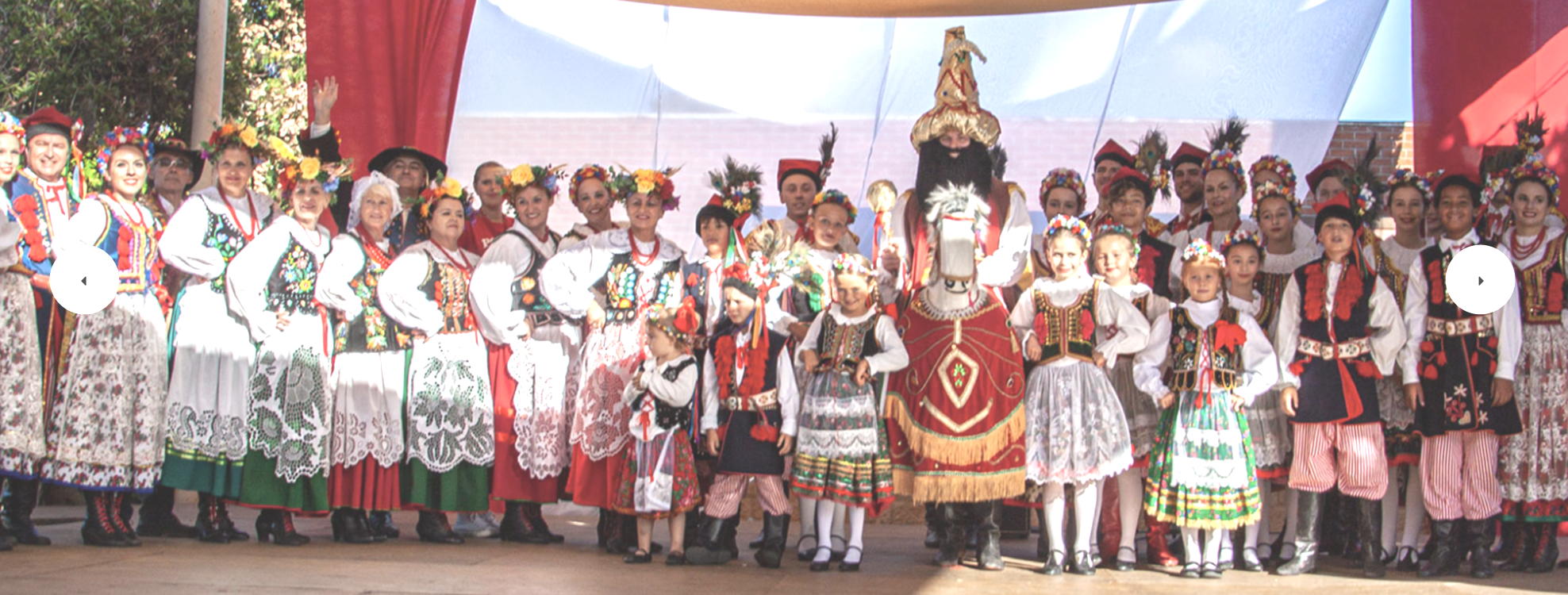 Established in 1956, the "Polish Folk Dance Group" was a result of a direct need to represent Poland in an "International Folk Festival" held annually at UCLA. They were soon after rewarded with further opportunities to dance and perform, including an invitation to perform at Disneyland. Steadily growing in number of members, the group performed for local community events and festivals, as well as, television shows.
Attracting newly arrived Polish immigrants and professional dancers from "Śląsk" and "Mazowsze" Polish national folk ensembles, the group continued to grow and increase its repertoire. In 1966, the "Polish Folk Dance Group" performed at the Los Angeles Coliseum to celebrate 1000 years of Christianity in Poland. From 1967 for close to the next 20 years, under her dynamic leadership, the ensemble blossomed; the repertoire was enriched with new national and cultural folk dances and Polish and American audiences enthusiastically received concerts.
Established in 1956, the "Polish Folk Dance Group" was a result of a direct need to represent Poland in an "International Folk Festival" held annually at UCLA. They were soon after rewarded with further opportunities to dance and perform, including an invitation to perform at Disneyland. Steadily growing in number of members, the group performed for local community events and festivals, as well as, television shows.
Attracting newly arrived Polish immigrants and professional dancers from "Śląsk" and "Mazowsze" Polish national folk ensembles, the group continued to grow and increase its repertoire. In 1966, the "Polish Folk Dance Group" performed at the Los Angeles Coliseum to celebrate 1000 years of Christianity in Poland. From 1967 for close to the next 20 years, under her dynamic leadership, the ensemble blossomed; the repertoire was enriched with new national and cultural folk dances and Polish and American audiences enthusiastically received concerts.
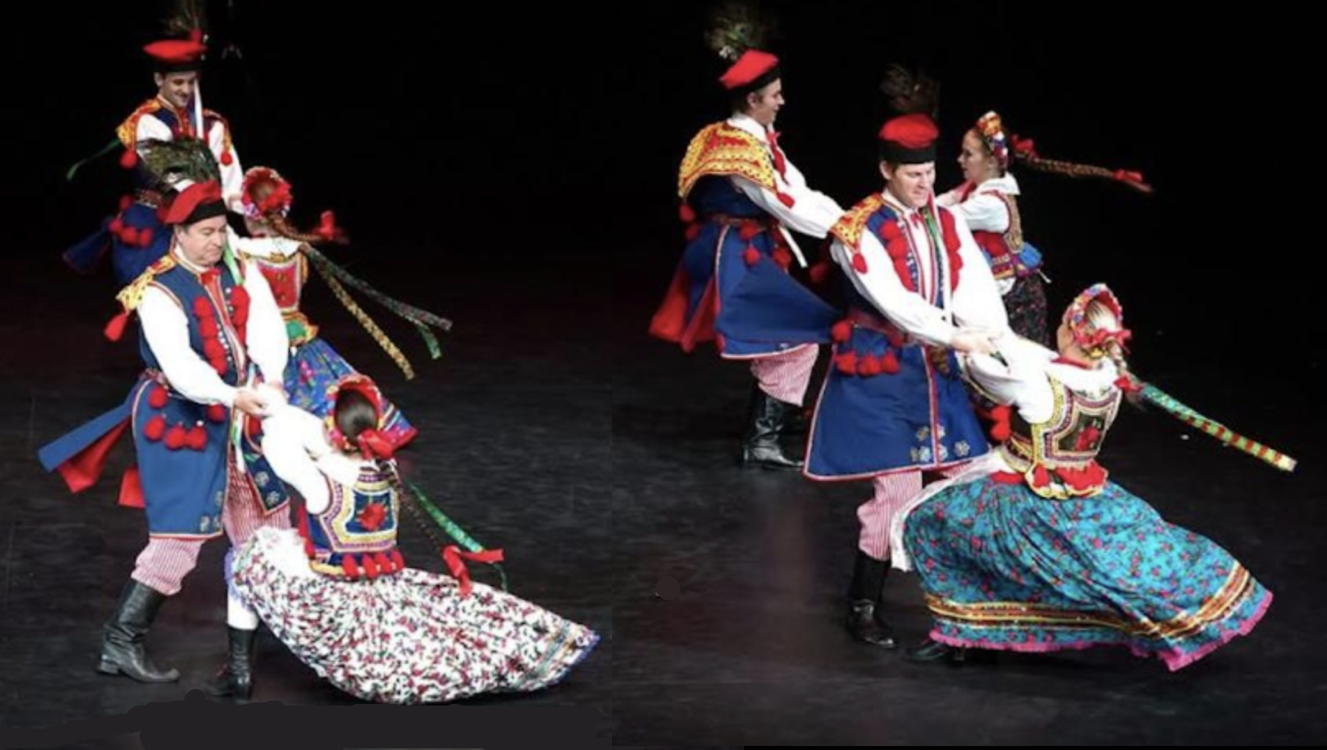 In 1968, the ensemble adopted its current name "Krakusy", a familiar reference to the townspeople of Krakow, the old Capital of Poland. Some of the more notable performances include in 1984, participation in the opening ceremonies of Olympic games at the Los Angeles Coliseum. Krakusy performed at the opening festivities preceding the Papal liturgy at Dodger Stadium in 1987. In 1997 the ground breaking ceremonies of the new cathedral "Queen of Angels" in downtown Los Angeles. Since its inception, Krakusy have meticulously retained the traditional costumes and authentic character of each Polish regional dance. A gold medal was received from Headquarters of "Wspólnota Polska", an organization that govern Polish folk ensembles all over the world. This medal was awarded to Krakusy for many years of work to entertain and educate Polish Americans and Americans about Polish dances, folk songs, costumes and polish customs. The Medal for Merit to Culture – Bronze Gloria Artis Medal, was awarded to Krakusy by the Ministry of Culture and National Heritage of the Republic of Poland for contributions to and protection of the Polish culture and the people’s heritage.